
[et_pb_section bb_built=”1″][et_pb_row][et_pb_column type=”4_4″][et_pb_text]
Invasive species have been recognized globally as a major threat to biodiversity as well as to agriculture and other human interests. It is very difficult to choose the top 100 invasive species that really are “worse” than any others. Species and their interactions with ecosystems are very complex. Some species may have invaded only a restricted region, but have a huge probability of expanding, and causing further great damage (e.g. see Boiga irregularis: the brown tree snake). Other species may already be globally widespread, and causing cumulative but less visible damage. Many biological families or genera contain large numbers of invasive species, often with similar impacts; in these cases one representative species was chosen. The one hundred species aim to collectively illustrate the range of impacts caused by biological invasion. They are listed in alphabetical order.
- Acacia mearnsii (tree)
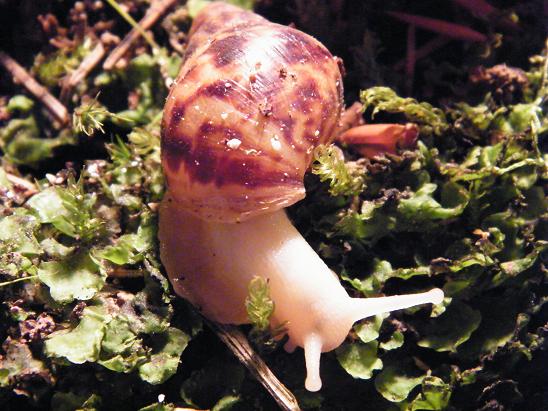
Common Names: Australian Acacia, Australische akazie, black wattleThis noxious, evergreen tree often reaches 20 m in height. Apart from producing copious numbers of seeds, it generates numerous suckers resulting in monotypic thickets. - Achatina fulica (mollusc)
Common Names: Afrikanische Riesenschnecke, giant African land snail, giant African snail.The giant African snail, Achatina fulica, has been widely introduced to Asia, to Pacific and Indian Oceans islands, and to the West Indies. It has also been intercepted widely by quarantine officials and incipient invasions have been eradicated, for instance in the mainland USA. It is a major agricultural and garden pest, and a general nuisance. It is also a vector (as are many snail species) of several human pathogens and parasites. Often its introduction leads to the subsequent introduction of predatory snails and, more recently, flatworms as putative biological control agents that can have devastating effects on native land snail diversity. - Acridotheres tristis (bird)
Common Names: common myna, Hirtenmaina, Indian myna, Indian mynah, mynahMynas are native to India, but have been introduced all over the world, mainly for their being able to reduce the insect population in agricultural areas. However, they reduce biodiversity by competing for nesting hollows, destroying chicks and eggs and evicting small mammals. - Aedes albopictus (insect)
Common Names: Asian tiger mosquito, forest day mosquito, zanzare tigreThe Asian tiger mosquito was introduced to the USA and other countries via used tyre imports. It is associated with the transmission of dengue fever, eastern equine encephalitis and dog heartworm, and possibly with St. Louis and LaCrosse encephalitis viruses. - Anopheles quadrimaculatus (insect)
Common Names: common malaria mosquito, GabelmückeThis relatively large mosquito is the chief vector of malaria. It breeds chiefly in pemanent freshwater and feeds at night on humans and domestic animals. - Anoplolepis gracilipes (insect)
Common Names: ashinaga-ki-ari, crazy ant, Gelbe Spinnerameise, gramang ant, long-legged ant,
Maldive ant, yellow crazy antAnoplolepis gracilipes, the yellow crazy ant, has been introduced across the tropics as a byproduct of human commerce. It invades urban, agricultural and native ecosystems where it can have large, catastrophic impacts. These impacts include decimation of endemic species, rapid degradation of native communities, and altered ecosystem processes. - Anoplophora glabripennis (insect)
Common Names: Asian longhorned beetle, Asiatischer Laubholzkäfer, longicorne Asiatique, starry sky beetleNative to China and Korea, this beetle has been intercepted in solid wood packaging material in the USA (14 states) and Britain. Known infestations were discovered in New York (1996) and Chicago (1998) about 10 yr after the beetle first entered the U.S. An infestation was also discovered in Austria in 2001, an estimated 2-3 yr after its introduction into Austria. - Aphanomyces astaci (macro-fungus)
Common Names: crayfish plague, WasserschimmelAphanomyces astaci, is a freshwater fungus which is nutritionally dependent on crayfish. This fungal disease has eliminated many native stocks of crayfish in Europe and there is a real danger that it will cause the extinction of some of the five European indigenous crayfish species. - Ardisia elliptica (tree)
Common Names: ati popa’a, shoebutton ardisiaThis shade-tolerant, evergreen tree grows rapidly, forming dense monotypic stands that prevent establishment of all other species. - Arundo donax (grass)
Common Names: arundo grass, bamboo reed, cana, cane, canne de Provence, carrizo grande, Cow cane, donax cane, giant cane, giant reed, narkhat, ngasau ni vavalangi, Pfahlrohr, reedgrass, river cane, Spanisches Rohr, Spanish cane, Spanish reedGiant reed is a perennial grass which has been widely introduced into primarily riparian zones and wetlands in subtropical and temperate areas of the world. Once established, it forms dense, homogenous stands at the expense of native plant species, altering the habitat of the local wildlife. It is also both a fire and flood hazard. - Asterias amurensis (starfish)
Common Names: Nordpazifischer Seestern, Northern Pacific seastarA. amurensis are seastars native to China, Korea, Russia and Japan. They have spread to North America and Australia where they seriously affect the native shellfish population. Where seastar densities are high, most bivalves and other attached or sedentary invertebrates are eliminated. - Banana bunchy top virus (BBTV) (micro-organism)
Common Names: BTV, Bunchy top virusBanana bunchy top virus is the pathogen which causes banana bunchy top disease of bananas. It is transmitted by the aphid vector, Pentalonia nigronervosa and is considered to be the most economically destructive of the virus diseases affecting bananas worldwide. - Batrachochytrium dendrobatidis (macro-fungus)
Common Names: Chytrid-Pilz, chytridiomycosis, frog chytrid fungusChytrid fungus in amphibians was first identified in 1998 by an international team of scientists from Australia, the United States and Great Britain and since has been linked to large amphibian die-offs in pristine areas of Panama and Australia. - Bemisia tabaci (insect)
Common Names: Mosca Blanca, sweet potato whitefly, Weisse FliegeThe sweet potato whitefly is a major pest worldwide of crops grown for food and fibre. Damage is caused by the piercing and sucking of sap from the foliage of plants, the vectoring of plant viruses, and the production of honeydew which serves as substrate for the growth of sooty moulds on leaves. - Boiga irregularis (reptile)
Common Names: Braune Nachtbaumnatter, brown tree snake, brown treesnake, culeplaNative to eastern Indonesia, the Solomon Islands, New Guinea, as well as the northern and eastern coasts of Australia, the brown snake is notorious for concealing itself in international freight and aircraft. It is nocturnal, secretive and arboreal, hunting for food at all levels within a forest. The brown treesnake has altered the terrestrial ecology and disrupted the electrical supply of Guam. - Bufo marinus (amphibian)
Common Names: Aga-Kröte, bufo toad, Bullfrog, cane toad, crapaud, giant American toad, giant toad, kwapp, macao, Maco pempen, Maco toro, Marine Toad, Suriname toadThe cane toad was introduced throughout the world as a biological control for various insect pests of sugarcane and other crops. It has become a pest in its introduced range. It will feed on any organism available. It preys on and competes with native amphibians for food and breeding habitat. - Capra hircus (mammal)
Common Names: goat, HausziegeGoats are herbivores. Their highly varied diet includes plants that are avoided by sheep or cattle, increasing the impact on native vegetation and native animals who use the vegetation for shelter. They easily become feral and can also spread disease to native animals. Goats were often introduced to Pacific islands for their milk or released as potential food for people marooned by shipwrecks. - Carcinus maenas (crustacean)
Common Names: European shore crab, green crab, strandkrabbeThis crab is native to Europe and northern Africa. It has been introduced to the USA, Australia and South Africa. It is a voracious a euryhaline food generalist. The voracious predator in some locations of its introduced range, has caused the decline of other crab and bivalve species. - Caulerpa taxifolia (aquatic plant)
Common Names: caulerpa, Schlauchalge, sea weedCaulerpa taxifolia was introduced to the Mediterranean around 1984, possibly as waste from the Monaco Aquarium (Meinesz & Hesse, 1991). It is a tropical seaweed but it has adapted well to colder waters and wherever it has established itself. The strain of Caulerpa taxifolia which has colonized the Mediterranean has some unusual morphological and physiological characteristics with respect to the tropical populations (longer fronds, a higher population density, adaptation to a large spectrum of temperatures, higher concentrations of toxic metabolites) (Boudouresque et al., 1995; Gacia et al., 1996). The competitive sucess of Caulerpa taxifolia over Mediterranean native communities seems to be related to these characteristics but also to the production of toxic secondary metabolites. - Cecropia peltata (tree)
Common Names: Ameisenbaum, faux-ricin, parasolier, pisse-roux, pumpwood, trumpet tree, yagrumo hembraA tree from tropical America, it was introduced to Hawai’i, French Polynesia, West Africa and Malaysia where it has since become invasive. It spreads in disturbed areas, lava flows, and forest gaps. - Cercopagis pengoi (crustacean)
Common Names: fishhook waterflea, Kaspischer WasserflohNative to the Ponto-Caspian-Aral region, it has been widely introduced in European basins since 1950s. Recent invasions include the Baltic Sea in 1992, Lake Ontario in 1998, and Lake Michigan and Finger Lakes in 1999. - Cervus elaphus (mammal)
Common Names: Cerf elaphe, Ciervo colorado, Deer, Edelhirsch, elk, European red deer, red deer, Rothirsch, Rotwild, Rothirsch, wapitiRed deer were introduced to several countries in South America. In Argentina they have invaded several National parks, influencing native flora and fauna and possibly disrupting ecological processes. Of particular concern is possible competition with an endangered deer endemic to the southern parts of Chile and Argentina. They also compete with livestock. - Chromolaena odorata (herb)
Common Names: agonoi, bitter bush, chromolaena, hagonoy, herbe du Laos, huluhagonoi, jack in the bush, kesengesil, mahsrihsrihk, masigsig, ngesngesil , otuot, rumput belalang, rumput Golkar, rumput putih, Siam weed, Siam-Kraut, triffid weed, wisolmatenrehweiA fast-growing perennial shrub native to South America and Central America. It has been introduced and has become an aggressive invasive weed in much of tropical Asia, Africa, and the Pacific. Siam weed forms dense stands, which prevent establishment of other species, both due to competition and allelopathic effects. It is also a problem in agricultural land and commercial plantations. - Cinara cupressi (insect)
Common Names: cypress aphid, cypress aphid, Zypressen BlattlausC. cupressi is a brownish soft-bodied insect classified as an aphid. It has been discovered around the world feeding on various trees from the following genus’: Cupressus, Juniperus, Thuja, Callitris, Widdringtonia, Chamaecyparis, Austrocedrus, and the hybrid Cupressocyparis. C. cupressi sucks the sap from twigs causing yellowing to browning of the foliage on the affected twig. The overall effect on the tree ranges from partial damage to eventual death of the entire tree. This aphid has seriously damaged commercial and ornamental plantings of trees around the globe. - Cinchona pubescens (tree)
Common Names: cascarilla, chinarindenbaum, hoja ahumada, hoja de zambo, quinine, quinoa, quinquinia rouge, red cinchona, roja, rosada, Roter ChinarindenbaumThis widely cultivated tropical forest tree invades a variety of forest and non-forest habitats, spreading by wind-dispersed seeds and replacing and outshading native vegetation. - Clarias batrachus (fish)
Common Names: Alimudan, cá trê tráng, cá trèn trang, clarias catfish, climbing perch, freshwater catfish, Froschwels, hito, htong batukan, ikan keling, ikan lele, Ito, kawatsi, keli, klarievyi som, koi, konnamonni, kug-ga, leleh, magur, mah-gur, mangri, marpoo, masarai, mungri, nga-khoo, pa douk, paltat, pantat, pla duk, pla duk dam, pla duk dan, pla duk nam jued, pla duk nam juend, Thai hito, Thailand catfish, trey andaing roueng, trey andeng, walking catfish, wanderwels, YerivahlayClarias batrachus a voracious predator native to southeastern Asia has been introduced into many places for fish farming. Walking catfish, as it is commonly known (named for their ability to move over land), is an opportunistic feeder and can go for months without food. During a drought large numbers of walking catfish may congregate in isolated pools and consume other species. They are known to have invaded aquaculture farms, entering ponds where they prey on fish stocks. C. batrachus has been described as a benthic, nocturnal, tactile omnivore that consumes detritus and opportunistically forages on large aquatic insects, tadpoles, and fish. - Clidemia hirta (shrub)
Common Names: Hirten-Schwarzmundgewaechs, kaurasiga, Koster’s curse, kui, mbona na mbulamakau, roinisinga, soap bush, soapbushThis noxious weedy shrub grows up to 2 m tall in pastures and forest. It is an aggressive invader which shades out all vegetation below it (Wester and Wood 1977). - Coptotermes formosanus (insect)
Common Names: Formosa Termite, formosan subterranean termiteThis termite causes considerable damage to trees, buildings, telephone poles, and underground electrical and telephone cable lines. In Hawaii, the cost to prevent and/or control infestations and to repair the damage caused by this pest has been estimated at more than $60 million a year. - Cryphonectria parasitica (macro-fungus)
Common Names: chestnut blight, EdelkastanienkrebsC. parasitica is a fungus that attacks primarily Castanea spp. but also has been known to cause damage to various Quercus spp. along with other species of hardwood trees. American chestnut, C. dentata, was a dominant overstorey species in United States forests, but now they have been completely replaced within the ecosystem. C. dentata still exists in the forests but only within the understorey as sprout shoots from the root system of chestnuts killed by the blight years ago. A virus that attacks this fungus appears to be the best hope for the future of Castanea spp., and current research is focused primarily on this virus and variants of it for biological control. Chestnut blight only infects the above-ground parts of trees, causing cankers that enlarge, girdle and kill branches and trunks. - Cyprinus carpio (fish)
Common Names: carp, carpa, carpat, carpe, carpe, carpe commune, carpeau, carpo, cerpyn, ciortan, ciortanica, ciortocrap, ciuciulean, common carp, crap, crapcean, cyprinos, escarpo, Europäischer Karpfen, European carp, German Carp, grass carp, grivadi, ikan mas, kapoor-e-Maamoli, kapor, kapr obecný, karp, karp, karp, karp, karp, karp dziki a. sazan, karpa, karpar, karpe, Karpe, karpen, karper, karpfen, karpion, karppi, kerpaille, koi, koi carp, korop, krap, krapi, kyprinos, læderkarpe, lauk mas, leather carp, leekoh, lei ue, mas massan, mirror carp, olocari, pa nai, pba ni, pla nai, ponty, punjabe gad, rata pethiya, saran, Saran, sarmão, sazan, sazan baligi, scale carp, sharan, skælkarpe, soneri masha, spejlkarpe, sulari, suloi, tikure, trey carp samahn, trey kap, ulucari, weißfische, wild carp, wildkarpfenThe common carp, has been introduced as a food and ornamental fish, into temperate freshwaters throughout the world. It is considered a pest because of its abundance and its tendency to reduce water clarity and destroy and uproot aquatic vegetation, used as habitat by a variety of aquatic species. - Dreissena polymorpha (mollusc)
Common Names: moule zebra, Racicznica zmienna, zebra mussel, Zebra-MuschelZebra mussels are native to the Caspian and Black Seas. They are now established in the UK, Western Europe, Canada and the USA. They compete with zooplankton for food, thus affecting natural food webs. They also interfere with the ecological functions of native molluscs and cause great economic damage. - Eichhornia crassipes (aquatic plant)
Common Names: aguapé, bung el ralm, jacinthe d’eau, Jacinto de agua, jacinto-aquatico, Jal kumbhi, lechuguilla, Lila de agua, mbekambekairanga, wasserhyazinthe, water hyacinthInfestations of water hyacinth block waterways, limiting boat traffic, swimming and fishing. It also prevents sunlight and oxygen from reaching the water column and submerged plants. Its shading and crowding of native aquatic plants dramatically reduces biological diversity in aquatic ecosystems. - Eleutherodactylus coqui (amphibian)
Common Names: Caribbean tree frog, common coqui, Coqui, Puerto Rican treefrogEleutherodactylus coqui is a relatively small tree frog native to Puerto Rico. The frogs are quite adaptable to different ecological zones and elevations. Their loud call is the main reason they are considered pests. E. coqui’s mating call is its namesake, a high-pitched, two-note “co-qui” (ko-kee’) which attains nearly 100 decibels at 0.5 meters. E. coqui have a voracious appetite. There is concern in Hawaii, where it has been introduced, that E. coqui may put Hawaii’s endemic insect and spider species at risk and compete with endemic birds and other native fauna which rely on insects for food. - Eriocheir sinensis (crustacean)
Common Names: Chinese freshwater edible crab, Chinese mitten crab, chinesische wolhandkrab, chinesische wollhandkrabbe, crabe chinois, kinesisk ullhandskrabba, kinesiske uldhandskrabbe, kinijos krabas, kitajskij mokhnatorukij krab, Krab welnistoreki, kraba welnistoreki, villasaksirapuThis migrating crab is native to Asia and has invaded Europe and now North America. It contributes to local extinction of native invertebrates, modifies habitats due to burrowing activities and costs industries (e.g. fishing and aquaculture) several 100,000s of dollars per year. Its burrowing behavior causes bank erosion. - Euglandina rosea (mollusc)
Common Names: cannibal snail, Rosige Wolfsschnecke, rosy wolf snailThe predatory “rosy wolf snail” (also known as the “cannibal snail”) is native to the south-eastern United States, especially Florida. It has been introduced to islands in the Pacific and Indian Oceans, also to Bermuda and the Bahamas, as a putative biological control agent for another alien species, the giant African snail (Achatina fulica). There is no good evidence that control of A. fulica has been effected, but E. rosea has caused the extinction of numerous endemic partulid tree snails in French Polynesia and has been heavily implicated in the extinction or at least decline of other species of snails wherever it has been introduced, notably in Hawaii. - Euphorbia esula (herb)
Common Names: Esels-Wolfsmilch, leafy spurge, spurge, wolf’s milkNative to Europe and temperate Asia, leafy spurge currently is found throughout the world with the exception of Australia. This aggressive invader displaces native vegetation by shading and using up available water and nutrients and by plant toxins that prevent the growth of other plants beneath it. - Fallopia japonica (herb, shrub)
Common Names: crimson beauty, Donkey rhubarb, German sausage, huzhang , itadori , Japanese bamboo, Japanese fleece flower, Japanese knotweed, Japanese polygonum, Kontiki bamboo, Mexican-bamboo , Peashooter plant, Renouée du Japon, Reynoutria fleece flower, Sally rhubarbF. japonica is a herbaceous perennial native to Japan. It has been introduced to Europe and North America as an ornamental. It is also used to stabilize soil, especially in coastal areas. It requires full sun and is found primarily in moist habitats but also grows in waste places, along roadways, and other disturbed areas. Once established, this species forms dense stands that shade and crowd out all other vegetation, displacing native flora and fauna, and the overwintering canes and leaves are slow to decompose. - Felis catus (mammal)
Common Names: Cat, domestic cat, feral cat, Hauskatze, house cat, moggy, poti, pussyCats, in various forms and sizes, occur naturally world-wide except Australasia and oceanic islands. The house cat, Felis catus, was domesticated in the eastern Mediterranean c. 3000 years ago. Considering the extent to which cats are valued as pets, it is not surprising that they have since been taken by humans to almost all parts of the world and become feral there. In the Pacific, they are present in almost all island groups . Within an island group, however, many uninhabited islands are still free of cats. - Gambusia affinis (fish)
Common Names: guayacon mosquito, Koboldkärpfling, Pez mosquito, western mosquitofishIntroduced throughout the world in the mistaken belief that they control mosquitoes better than native fish, mosquitofish have harmed aquatic ecosystems because of their highly predaceous habits. Intentional release by mosquito-control agencies continues. - Hedychium gardnerianum (herb)
Common Names: awapuhi kahili, cevuga dromodromo, conteira, Girlandenblume, kahila garland-lily, Kahili, kahili ginger, Kopi, sinter weitahta, wild gingerThis showy garden escapee grows just over 1 m tall in wet habitats between sea level and 1,700 m displacing other plant species. It forms vast, dense colonies, choking the understory and stream sides. Its seeds are dispersed by birds as well as man. Even small root fragments will regrow. - Herpestes javanicus (mammal)
Common Names: beji, Kleiner Mungo, mangouste, mangus, mweyba, newla, small Indian mongooseMongooses still threaten endemic species on tropical cane growing islands. They have caused the population demise or extinction of many endemic vertebrates, continue to cause livestock damage
and pose a disease risk. - Hiptage benghalensis (shrub, vine, climber)
Common Names: Adimurtte, Adirganti, Atimukta, Benghalen-Liane, Chandravalli, Haldavel, hiptage, Kampti, Kamuka, liane de cerf, Madhalata, Madhavi, Madhavi, Madhavi, Madhumalati, Madmalati, Ragotpiti, VasantdutiA native of India, Southeast Asia and the Philippines, Hiptage benghalensis is often cultivated in the tropics as an ornamental. It has been recorded as causing problems in parts of Australia and the USA, and is an extremely invasive liana on the Mascarene islands. On Mauritius and Réunion it thrives in drier lowland forest, forming impenetrable thickets, smothering native vegetation, and choking large trees. - Imperata cylindrica (grass)
Common Names: alang-alang, blady grass, Blutgras, carrizo, cogon grass, gi, impérata cylindrique, japgrass, kunai, lalang, ngi, paille de dys, paillotte, satintail, speargrassCogongrass (Imperata cylindrica) is a nuisance whereever it is found costing hundreds of millions of dollars to control, with its only documented beneficial use is a thatch for building huts and roofs. - Lantana camara (shrub)
Common Names: ach man, Angel lips, ayam, Big sage, Blacksage, bunga tayi, cambara de espinto, cuasquito, flowered sage, Lantana, lantana wildtype, largeleaf lantana, latora moa, pha-ka-krong, Prickly lantana, Shrub verbean, supirrosa, Wandelroeschen, white sage, Wild sageWidely grown as an ornamental shrub throughout the tropics, subtropics and temperate zones, it is established there as a weed of pastures and the environment in circa 50 countries. - Lates niloticus (fish)
Common Names: chengu, mbuta, nijlbaars, nilabborre, Nilbarsch, Nile perch, perca di Nilo, perche du Nil, persico del Nilo, sangara, Victoria perch, Victoriabaars, victoriabarschThe Nile perch is a large freshwater fish. Also known as capitaine, mputa or sangara, it can grow up to 200 kg and two metres in length. It was introduced to Lake Victoria in 1954 where it has contributed to the extinction of more than 200 endemic fish species through predation and competition for food. - Leucaena leucocephala (tree)
Common Names: Acacia palida, aroma blanca, balori, bo chet, cassis, false koa, faux mimosa, faux-acacia, fua pepe, ganitnityuwan tangantan, graines de lin, guaje, guaslim, guaxin, huaxin, horse/wild tamarind, huaxin, ipil-ipil, jumbie bean, kan thin, kanthum thect, koa haole, koa-haole, kra thin, kratin, lamtoro, lead tree, Leucaena, leucaena, liliak, Lino criollo, lopa samoa, lusina, nito, pepe, rohbohtin, schemu, siale mohemohe, subabul, tamarindo silvestre, tangan-tangan, tangantangan, te kaitetua, telentund, tuhngantuhngan, uaxim, vaivai, vaivai dina, vaivai ni vavalangi, wild mimosa, wild tamarind, ZarcillaLeucaena is a ‘conflict tree’ being widely promoted for tropical forage production and reforestation whilst at the same time it is spreading naturally and is widely reported as a weed. This seedy thornless tree can form dense monospecific thickets and is difficult to eradicate once established, rendering extensive areas unusable and inaccessible, and threatening native plants in some areas. - Ligustrum robustum (shrub, tree)
Common Names: Bora-Bora, Ceylon Privét, Sri Lankan privet, Tree Privet, TroeneLigustrum robustum subsp.walkeri (Sri Lankan privet) is a highly invasive weed in the Mascarene Achipelago (in the Indian Ocean) where it was introduced (in Mauritius over a century ago and in Réunion Island in the 1960s). On the oceanic islands it has invaded it disrupts primary forest regeneration and threatens native floral biodiversity. Its high fruit production (due to a lack of natural enemies) in regions where it is invaded has been cited as one reason for its high invasiveness. - Linepithema humile (insect)
Common Names: Argentine ant, Argentinische Ameise, formiga-argentinaAn incredibly successful colonizer capable of invading both disturbed and undisturbed habitat, the Argentine ant can produce large numbers of aggressive workers. It is an economic and ecological pest, affecting agriculture, displacing native arthropods, and potentially altering ecosystem processes. It has formed the world’s largest colony in South Europe, where it´s invasive. - Lymantria dispar (insect)
Common Names: Asian gypsy moth, erdei gyapjaslepke, gubar, gypsy moth, lagarta peluda, Limantria, løVstraesnonne, maimai-ga, Mniska vel’kohlava, schwammspinner, SpongieuseLymantria dispar is one of the most destructive pests of shade, fruit, and ornamental trees throughout the northern hemisphere. It is also a major pest of hardwood forests. L. dispar caterpillars cause extensive defoliation, leading to reduced growth or even mortality of the host tree. Their presence can destroy the aesthetic beauty of an area by defoliating and killing the trees and covering the area with their waste products and silk. Scenic overlooks that were once beautiful have become spotted with dead standing trees where L. dispar has invaded. Also, urticacious hairs on larvae and egg masses cause allergies in some people. - Lythrum salicaria (aquatic plant, herb)
Common Names: Blutweiderich, purple loosestrife, rainbow weed, salicaire, spiked loosestrifeLythrum salicaria is an erect perennial herb with a woody stem and whirled leaves. It has the ability to reproduce prolifically by both seed dispersal and vegetative propagation. Any sunny or partly shaded wetland is vulnerable to L. salicaria invasion, but disturbed areas with exposed soil accelerate the process by providing ideal conditions for seed germination. - Macaca fascicularis (mammal)
Common Names: Crab-eating macaque, Long-tailed macaqueMacaques are native to south-east Asia, and have been introduced to Mauritius, Palau, Hong Kong and parts of Indonesia, where they are considered invasive in all but the latter. They can cause significant damage to native flora and fauna, through competition, predation and facilitating the spread of exotic plants, as well as agriculture by raiding food crops. They are an opportunistic, generalist species which show a preference for disturbed habitat, and have few natural predators in their introduced range. - Melaleuca quinquenervia (tree)
Common Names: cajeput, Mao-Holzrose, Melaleuca, niaouli, paper bark tree, punk treeThis tall tree, native to Eastern Australia, New Guinea and New Caledonia, invades open swampy areas. - Miconia calvescens (tree)
Common Names: bush currant, cancer vert, miconia, purple plague, velvet treeNative to tropical America, this small tree forms dense monospecific stands shading out the native vegetation with its large leaves, and suppressing the growth and regeneration of the native species in the understory. Introduced originally as an ornamental plant on Tahiti in 1937, it now dominates the forests of over 2/3’s of that island and has spread to other islands in French Polynesia (Raiatea, Moorea, Marquesas). Introduced to Hawai’i in the 1960s, it is spreading rapidly on several islands (Hawai’i Maui, O’ahu), it is now regarded as the worst threat to the rain forest watersheds. - Micropterus salmoides (fish)
Common Names: Achigã, Achigan, Achigan à grande bouche, American black bass, bas Dehanbozorg, Bas wielkogeby, bass, bass wielkgebowy, biban cu gura mare, black bass, Bol’sherotyi chernyi okun’, Bolsherotnyi amerikanskii tscherny okun, buraku basu, fekete sügér, forelbaars, forellenbarsch, green bass, green trout, großmäuliger Schwarzbarsch, huro, isobassi, khorshid Mahi Baleh Kuchak, lakseabbor, largemouth bass, largemouth black bass, Lobina negra, Lobina-truche, Northern largemouth bass, okounek pstruhový, okuchibasu, Öringsaborre, Ørredaborre, ostracka, ostracka lososovitá, perca americana, perche d’Amérique, perche noire, perche truite, persico trota, stormundet black bass, stormundet ørredaborre, tam suy lo ue, Zwarte baarsBecause of its appealing sporting quality and tasty flesh, the large-mouth bass has been widely introduced throughout the world. Introduced bass have, in some places affected populations of small native fishes through predation, sometimes resulting in the decline or extinction of such species. Its diet includes fish, crayfish, amphibians, and insects. - Mikania micrantha (vine, climber)
Common Names: American rope, Chinese creeper, Chinesischer Sommerefeu, fue saina, liane americaine, mile-a-minute weed, ovaova, usuvanua, wa bosucu, wa mbosuthu, wa mbosuvu, wa mbutako, wa ndameleMikania micrantha is a fast growing, perennial, creeping and twining plant, commonly called mile-a-minute because of its vigorous and rampant growth habit. It grows best where fertility, organic matter, soil moisture, and humidity are all high and damages or kills other plants by cutting out the light and smothering them. Not to be confused with Polygonum perfoliatum (also mile-a-minute weed). - Mimosa pigra (shrub)
Common Names: bashful plant, Catclaw, catclaw mimosa, chi yop, columbi-da-lagoa, eomrmidera, espino, giant sensitive plant, giant sensitive tree, giant trembling plant, juquiri, juquiri grand, kembang gajah, mai yah raap yak, maiyarap ton, malicia-de-boi, Mimosa, mimosa, Mimose, putri malu , semalu gajah, sensitiva, trinh nu nhon , una de gato, xao hoMimosa pigra is an aggressive woody shrub that forms impenetrable, prickly thickets up to four to five metres high. It makes infested areas inaccessible to animals and people, and interferes with stock watering, irrigation and recreational use of waterways. It invades watercourses and seasonally flooded wetlands in tropical and sub-tropical regions. - Mnemiopsis leidyi (comb jelly)
Common Names: American comb jelly, comb jelly, comb jellyfish, Rippenqualle, sea gooseberry, sea walnut, Venus’ girdle, warty comb jellyThe ctenophore Mnemiopsis ledyi is a major carnivorous predator of edible zooplankton (including meroplankton), pelagic fish eggs and larvae and is associated with fishery crashes. Commonly called the comb jelly or sea walnut, it is indigenous to temperate to subtropical estuaries along the Atlantic coast of North and South America. In the early 1980s, it was accidentally introduced via the ballast water of ships to the Black Sea where it had a catastrophic effect on the entire ecosystem. In the last two decades of the twentieth century, it has invaded the Azov, Marmara, Aegean Seas and recently it was introduced into the Caspian Sea via the ballast water of oil tankers. - Mus musculus (mammal)
Common Names: Biganuelo, field mouse, Hausmaus, house mouse, kiore-iti, Raton casero, souris commune, wood mouseThe house mouse probably has a world distribution more extensive than any mammal apart from humans. Its geographic spread has been facilitated by its commensal relationship with humans which extends back at least 8,000 years. They do considerable damage by destroying crops and consuming and/or contaminating food supplies intended for human consumption. They are prolific breeders, sometimes errupting and reaching plague proportions. They have also been implicated in the extinction of indigenous species in ecosytems they have invaded and colonised which are outside their natural range. An important factor in the success of the house mouse is their behavioural plasticity brought about by the decoupling of genetics and behaviour. This enables the house mouse to adapt quickly and to survive and prosper in new environments. - Mustela erminea (mammal)
Common Names: ermine, ermine, Grosswiesel, Hermelin, hermine, short-tailed weasel, short-tailed weasel, stoatThe stoat is an intelligent, versatile predator specialising in small mammals and birds. Fearless in attacking animals larger than itself, and adapted to surviving periodic shortages by storage of surplus kills. - Myocastor coypus (mammal)
Common Names: Biberratte, coipù, coypu, nutria, ragondin, ratão-do-banhado, SumpfbiberThe coypu is a large semi-aquatic rodent which originated from South America. However, due to escapes from fur farms there are now large feral populations in North America, Europe and Asia. Their burrows penetrate and damage river banks, dikes and irrigation facilities. Feeding on wetland plants could devastate large areas of the reed swamp. - Morella faya (tree)
Common Names: Feuerbaum, fire treeThis evergreen shrub or small tree was introduced to Hawaii in the late 1800s as an ornamental. It is now found on most of the major Hawaiian islands. Once established, this species forms dense, single-species stands that prevent regeneration of native species. - Mytilus galloprovincialis (mollusc)
Common Names: Mediterranean mussel, Mittelmeer-MiesmuschelIn South Africa, the Mediterranean mussel is replacing the indigenous black mussel and the brown mussel. Also sometimes called the Blue mussel, it can be confused with Mytillus edilus. It is an introduced species in Hawaii and parts of the United States. - Oncorhynchus mykiss (fish)
Common Names: Pstrag teczowy, rainbow trout, redband trout, Regenbogenforelle, Steelhead trout, Trucha arco iris, truite arc-en-cielRainbow trout are a popular gaming fish and have been introduced into many rivers and lakes. They displace native endangered fish by eating their larvae as well as by crossbreeding with other trout, affecting the gene pool. They also displace other fish from their natural refuges. - Ophiostoma ulmi sensu lato (macro-fungus)
Common Names: dutch elm disease, SchlauchpilzDutch Elm disease is a wilt disease caused by a pathogenic fungus disseminated by specialized bark beetles (Brasier, 2000). There have been two destructive pandemics of the disease in Europe and North America during the last century, caused by the successive introduction of two fungal pathogens: Ophiostoma ulmi and Ophiostoma novo-ulmi , the latter much more aggressive. The vector is represented by bark beetles, various different species of scolyts living on elm. These beetles breed under the bark of dying elm trees. The young adults fly from the DED infected pupal chambers to feed on twig crotchtes of healthy elm trees. As a consequence spores of the fungus carried on the bodies of these beetles are deposited in healthy plant tissue. O. ulmis.l. can also spread via root grafts. - Opuntia stricta (shrub)
Common Names: Araluen pear, Australian pest pear, chumbera, common pest pear, common prickly pear, erect prickly pear, Feigenkaktus, gayndah pear, nopal estricto, pest pear of Australia, sour prickly pear, spiny pest pear, suurturksvyOpuntia stricta is a cactus of up to 2m height, which originates in central America. This spiny shrub favours habitats such as rocky slopes, river banks and urban areas. It was considered to be Australias worst ever weed. Opuntia stricta is also invasive in South Africa, where biological options are currently being explored to control the problem. - Oreochromis mossambicus (fish)
Common Names: blou kurper, common tilapia, fai chau chak ue, Java tilapia, kawasuzume, kurper bream, malea, mojarra, mosambik-maulbrüter, Mozambikskaya tilapiya, Mozambique cichlid, Mozambique mouth-breeder, Mozambique mouthbrooder, Mozambique tilapia, mphende, mujair, nkobue, tilapia, tilapia del Mozambique, tilapia du Mozambique, Tilapia mossambica, tilapia mozámbica, trey tilapia khmao, weißkehlbarsch, wu-kuo yuMozambique tilapia has spread worldwide through introductions for aquaculture. Established populations of this species in the wild are a result of intentional releases or escapes from fish farms. It is omnivorous and feeds on almost anything from algae to insects. - Oryctolagus cuniculus (mammal)
Common Names: Europäisches Wildkaninchen, kaninchen, lapin, rabbitNative to southern Europe and North Africa, rabbits have been introduced to all continents except Antarctica and Asia. Often they were introduced by Acclimatisation Societies. In many countries they cause serious erosion of soils by overgrazing and burrowing. - Pheidole megacephala (insect)
Common Names: big-headed ant, brown house-ant, coastal brown-ant, Grosskopfameise, lion antThis ant is one of the most invasive species, having achieved a global distribution. It is a serious threat to biodiversity through the displacement of most native invertebrate faunas, a pest of agriculture as it harbours phytophagous insects that reduce crop productivity, and it is a domestic pest. - Phytophthora cinnamomi (macro-fungus)
Common Names: Phytophthora Faeule der Scheinzypresse, phytophthora root rotP. cinnamomi is a root fungus that causes serious disease and death of a very wide variety of plant species. It thrives in moist conditions and feeds on the roots and basal stem tissue of living plants. It weakens or kills the plants by hindering the movement of water and nutrients within the plant. - Pinus pinaster (tree)
Common Names: cluster pine, Maritime PineThis tree from the Mediterranean Basin was planted in temperate regions within and outside its natural range for a wide range of reasons. It regenerated readily almost wherever it is planted. In many places it invades natural shrubland, forest and grass. - Plasmodium relictum (micro-organism)
Common Names: avian malaria, paludisme des oiseaux, VogelmalariaThis mosquito-transmitted avian malarial parasite may be lethal to highly susceptible species (penguins) and avifaunas (Hawaiian Islands) that have evolved in the absence of this disease. The most prevalent mosquito transmitting avian malaria in Hawaii is Culex quinquefasciatus, though a number of other mosquitoes have been found to harbour the parasite in experiments. Passerine birds are the most common host of this parasite. - Platydemus manokwari (flatworm)
Common Names: Flachwurm, flatwormA predatory species of flatworm that has been intentionally and unofficially introduced to many islands throughout the Pacific and Indian Oceans as a biological control agent for the giant African snail (Achatina fulica). It now poses a serious threat to native gastropod faunas, including rare, endemic snail species. - Pomacea canaliculata (mollusc)
Common Names: apple snail, channeled apple snail, Gelbe Apfelschnecke, golden apple snail, golden kuhol, miracle snailA freshwater snail with a voracious appetite for water plants including lotus, water chestnut, taro, and rice. Introduced widely from its native South America by the aquarium trade and as a source of human food, it is a major crop pest in south east Asia (primarily in rice) and Hawaii (taro), and poses a serious threat to many wetlands around the world through potential habitat modification and competition with native species. - Potamocorbula amurensis (mollusc)
Common Names: Amur river clam, Amur river corbula, Asian bivalve, Asian clam, brackish-water corbula, Chinese clam, marine clam, Nordpazifik-Venusmuschel, NumakodakiThe suspension-feeding clam Potamocorbula amurensis is native to Japan, China and Korea in tropical to cold temperate waters. Known as the Asian or Chinese clam, it has been designated as a major bilogical disturbance with significant ecological consequences in the San Francisco Bay area of California where large populations have become established. - Prosopis glandulosa (tree)
Common Names: honey mesquite, mesquite, Mesquite-Busch, Texas mesquiteMesquite is a perennial, woody, deciduous shrub or small tree. It forms impenetrable thickets that compete strongly with native species for available soil water, suppress grass growth and may reduce understory species diversity. - Psidium cattleianum (shrub, tree)
Common Names: cattley guava, cherry guava, Chinese guava, Erdbeer-Guave, goyave de Chine, kuahpa, ngguava, purple strawberry guava, strawberry guava, tuava tinito, waiawiP. cattleianum is an invasive species that displaces native vegetation. It has had a devastating effect on native habitats in Mauritius, and is considered as one of the worst plant pests in Hawaii. - Pueraria montana var. lobata (vine, climber)
Common Names: kudzu, kudzu vine, Kudzu-KletterweinKudzu is a semiwoody vine, a legume, with a twining and trailing growth habit that can form dense infestations covering ground and trees. It is reported to infest about 2 to 3 million hectacres in the Eastern U.S. and results in estimated loses of $500US million per year in land productivity and control costs. - Pycnonotus cafer (bird)
Common Names: red-vented bulbul, RußbülbülThis Bulbul is a noisy, gregarious bird, distinguished by a conspicuous crimson patch below the root of the tail. It is considered to be invasive because it is an agricultural pest and destroy fruits, flowers, beans, tomatoes and peas, and may also help to spread the seed of other invasive species. It occurs naturally, from Pakistan to southwest China and has been introduced to many Pacific Islands, a number of which class this bird as an invasive. The bulbul (native to parts of Asia) was introduced to some of the Pacific Islands, where it has caused serious problems by eating fruit and vegetable crops, as well as nectar, seeds and buds. The bulbul is aggressive and chases off other bird species. - Rana catesbeiana (amphibian)
Common Names: bullfrog, North American bullfrog, Ochsenfrosch, Rana toroThe bullfrog has been widely distributed via aquaculture and the aquarium trade. It is one of the most frequently cultivated edible frogs, worldwide. Primary concerns are competition with and predation upon native herpetofauna. - Rattus rattus (mammal)
Common Names: Black rat, black rat, blue rat, bush rat, European house rat, Hausratte, roof rat, ship ratA native of the Indian sub-continent, this rat has now spread throughout the world. It will feed on and damage almost any edible thing. Ship rats are widespread in forest and woodlands as well as being able to live in and around buildings. A very agile rat, it often frequents the tree tops searching for food and nesting there in bunches of leaves and twigs. - Rinderpest virus (micro-organism)
Common Names: Cattle plagueRinderpest (Cattle Plague) is a highly fatal viral disease of domestic cattle, buffaloes and yaks. It also affects sheep, goats and some breeds of pigs and a large variety of wildlife species. Although humans are not susceptible to Rinderpest, famine devastates human populations dependant on cattle and buffalo for thier food and livelihood. Mass vaccinations over the last century have greatly reduced outbreaks of Rinderpest. The Global Rinderpest Eradication Program (GREP) was established in 1987 by the United Nation’s FAO to develop strategies of control in high risk countries that will lead to the total eradication of the Rinderpest virus by 2010. - Rubus ellipticus (shrub)
Common Names: Asian wild raspberry, broadleafed bramble, Ceylon blackberry, eelkek, Himalaya-Wildhimbeere, kohkihl, Molucca berry, Molucca bramble, Molucca raspberry, piquant lou-lou, robust blackberry, soni, wa ngandrongandro, wa sori, wa votovotoa, wild blackberry, wild raspberry, yellow Himalayan raspberryR. ellipticus is a prickly shrub, which invades native forests. It is spread by way of underground shoots and the seeds are dispersed by fruit-eating birds and mammals. There are major infestations in Hawaii, where it has displaced the native Hawaiian raspberry (Rubus hawaiiensis). - Salmo trutta (fish)
Common Names: an breac geal, aure, bachforelle, blacktail, breac geal, brook trout, brown trout, denizalabaligi, denizalasi, Europäische Forelle, finnock, forelle, galway sea trout, gillaroo, gwyniedyn, havørred, havsöring, herling, hirling, k’wsech, kumzha, lachförch, lachsforelle, lassföhren, losos taimen, losos’ taimen, mahiazad-e-daryaye khazar, meerforelle, meritaimen, morska postrv, morskaya forel’, orange fin, öring, orkney sea trout, ørred, ørret, pastrav de mare, peal, pstruh morsky, pstruh obecný, pstruh obecný severomorský, pstruh obycajný, salmo trota, salmon trout, sea trout, sewin, siwin, sjøaure, sjøørret, sjourrioi, Ta?ass?p?st??fa, taimen, thalasopestrofa, troc, troc wedrowna, trota fario, trout, trucha, trucha común, trucha marina, truita, truite brune, truite brune de mer, truite d’europe, truite de mer, truta marisca, truta-de-lago, truta-fário, truta-marisca, urriði, whiting, whitling, zeeforelThe brown trout was introduced around the world for aquaculture, and stocked for sport fisheries. It is blamed for reducing native fish populations, especially other salmonids through predation, displacement, and food competition. It is a popular angling fish. - Schinus terebinthifolius (tree)
Common Names: Brazilian holly, Brazilian pepper, Brazilian pepper tree, Christmas berry, faux poivrier, Florida holly, Mexican pepper, Pimienta de Brasil, poivre rose, Rosapfeffer, waruiNative to Argentina, Paraguay and Brazil, Schinus is a pioneer of disturbed sites, but is also successful in undisturbed natural environments. It can be an aggressive weed that displaces native vegetation. - Sciurus carolinensis (mammal)
Common Names: Grauhoernchen, gray squirrel, grey squirrel, scoiattolo grigioImported as a pet from North America to UK, Italy, and South Africa. In UK and Italy it expanded causing the local extinction of the native red squirrel. A further expansion from the Alps to a large portion of Eurasia is predicted. - Solenopsis invicta (insect)
Common Names: red imported fire ant (RIFA), Rote importierte FeuerameiseThese ants are aggressive generalist foragers that occur in high densities, and can thus dominate most potential food sources. They breed and spread rapidly. If disturbed, they relocate rapidly so as to ensure survival of the colony. Their stinging ability allows them to subdue prey and repel even larger vertebrate competitors from resources. - Spartina anglica (grass)
Common Names: common cord grass, Englisches Schlickgras, rice grass, townsends grassS. anglica is a perennial salt marsh grass. It has been planted widely to stablize tidal mud flats. Its invasion and spread leads to the exclusion of native plant species and the reduction of suitable feeding habitat for wildfowl and waders. - Spathodea campanulata (tree)
Common Names: African tulip tree, Afrikanischer Tulpenbaum, Amapola, apär, baton du sorcier, fa‘apasi, fireball, Flame of the forest, fountain tree, Indian Cedar, ko‘i‘i, mata ko‘i‘I, mimi, orsachel kui, patiti vai, pisse-pisse, pititi vai, rarningobchey, Santo Domingo Mahogany, taga mimi, tiulipe, tuhke dulip, tulipan africano, tulipier du GabonThis evergreen tree is a native of West Africa that is widely planted throughout the tropics and has naturalized in many parts of the Pacific. It favours moist habitats and will grow best in sheltered tropical areas. It has become an invasive in Hawaii, Fiji, Guam, Vanuatu, the Cook Islands and Samoa (Labrada, pers.comm.), and is a potential invader in several other tropical locations. - Sturnus vulgaris (bird)
Common Names: blackbird, common starling, English starling, Estornino pinto, Etourneau sansonnet, étourneau sansonnet, Europäischer Star, European starlingNative to Europe, Asia and North Africa, the European starling has been introduced globally save in neotropic regions. The starling prefers lowland habitats and is an aggressive omnivore. European starlings cost hundreds of millions of dollars in agricultural damage each year and contribute to the decline of local native bird species through competition for resources and nesting space. - Sus scrofa (mammal)
Common Names: kuhukuhu, kune-kune, petapeta, pig, poretere, razorback, te poaka, WildschweinFeral pigs are escaped or released domestic animals. Introduced to many parts of the world, they damage crops, stock and property and transmit many diseases. They dig up large areas of native vegetation and spread weeds, disrupting ecological processes such as succession and species composition. - Tamarix ramosissima (shrub, tree)
Common Names: salt cedar, Sommertamariske, tamariskTamarisk is a long-lived shrub or tree. Native to Asia and southeastern Europe, it is now extensively naturalised in the United States and Mexico. It is able to grow in extremely saline soils and is easily propagated. It impedes the flow of water at high water levels, creating flooding problems. - Trachemys scripta elegans (reptile)
Common Names: Gelbwangen-Schmuckschildkroete, red-eared slider, red-eared slider terrapinSlider turtles are popular pets and as a result have become established in many parts of the world, where it is thought that they compete with native aquatic turtles. They are omnivorous and will eat insects, crayfish, shrimp, worms, snails, amphibians and small fish as well as aquatic plants. Red-eared sliders are found both in fresh and brackish waters including coastal marsh ponds - Trichosurus vulpecula (mammal)
Common Names: brushtail possum, FuchskusuThis solitary, nocturnal, arboreal marsupial (introduced from Australia) damages native forests in New Zealand by selective feeding on foliage and fruits. It also preys on bird nests and is a vector for bovine tuberculosis. - Trogoderma granarium (insect)
Common Names: escarabajo khapra, khapra beetle, khaprakäfer, trogoderma (dermeste) du grainThe Khapra beetle is one of the most important stored product pest worldwide. It maintains its presence in stores in very low numbers and is able to survive long period of time in inactive state. - Ulex europaeus (shrub)
Common Names: gorse, Kolcolist zachodni, StechginsterGorse is a spiny, perennial, evergreen shrub. Grows in dense and impenetrable thickets. It is common in disturbed areas, grasslands, shrublands, forest margins, coastal habitats and waste places. Ulex is a very successful and tenacious plant when it becomes established. - Undaria pinnatifida (aquatic plant)
Common Names: apron-ribbon vegetable, Asian kelp, haijiecai, Japanese kelp, Miyeuk, qundaicai, wakameA kelp native to Japan where it is cultivated for human consumption. It is an opportunistic weed which spreads mainly by fouling ship hulls. It forms dense forests, resulting in competition for light and space which may lead to the exclusion or displacement of native plant and animal species. - Vespula vulgaris (insect)
Common Names: common wasp, common yellowjacket, Gemeine WespeCommon wasps nest underground and in cavities in trees and buildings. In addition to causing painful stings to humans, they compete with birds and other insects for insect prey and sugar sources. They will also eat fruit crops and scavenge around rubbish bins and picnic sites. - Vulpes vulpes (mammal)
Common Names: fuchs, lape, lis, raposa, red fox, renard, rev, Rotfuchs, silver, black or cross fox, volpe, vos, zorroNative to Europe, Asia, North Africa, and boreal regions of North America, European red foxes have been introduced into Australia and temperate regions of North America. Introduced red foxes have negative impacts on many native species, including smaller canids and ground nesting birds in North America, and many small and medium-sized rodent and marsupial species in Australia. - Wasmannia auropunctata (insect)
Common Names: albayalde, cocoa tree-ant, formi électrique, formiga pixixica, fourmi rouge, hormiga colorada, hormiga roja, hormiguilla, little fire ant, little introduced fire ant, little red fire ant, pequena hormiga de fuego, petit fourmi de feu, Rote Feuerameise, sangunagenta, satanica, small fire ant, tsangonawenda, West Indian stinging ant, Yerba de GuineaThe little fire ant is blamed for reducing species diversity, reducing overall abundance of flying and tree-dwelling insects, and eliminating arachnid populations. It is also known for its painful stings. On the Galapagos, it eats the hatchlings of tortoises and attacks the eyes and cloacae of the adult tortoises. It is considered to be perhaps the greatest ant species threat in the Pacific. - Sphagneticola trilobata (herb)
Common Names: ate, atiat, creeping ox-eye, dihpw ongohng, Hasenfuss, ngesil ra ngebard, rosrangrang, Singapore daisy, trailing daisy, tuhke ongohng, ut mõkadkad, ut telia, wedeliaThis creeping herb is native to the tropics of Central America and has naturalised in many wet tropical areas of the world. It forms a dense ground cover, crowding out or preventing regeneration of other species. Cultivated as an ornamental.
[/et_pb_text][/et_pb_column][/et_pb_row][/et_pb_section]


One Response
3.5